AUGUST 2, 2027
THE NEXT TOTALITY ALREADY HAS A DATE.
A once-in-a-lifetime alignment. A moment that will never happen twice.
A once-in-a-lifetime alignment. A moment that will never happen twice.

A TOTAL SOLAR ECLIPSE
On August 2, 2027, the sky will offer one of the most spectacular astronomical events of our time: a total solar eclipse.
On August 2, 2027, the sky will offer one of the most spectacular astronomical events of our time: a total solar eclipse.
A solar eclipse occurs when the Moon passes directly between the Earth and the Sun. During a total eclipse, the Moon completely covers the Sun’s bright disk for a few precious minutes. Daylight fades into twilight, temperatures can drop, and the solar corona — the Sun’s outer atmosphere — becomes visible around the dark silhouette of the Moon.
A solar eclipse occurs when the Moon passes directly between the Earth and the Sun. During a total eclipse, the Moon completely covers the Sun’s bright disk for a few precious minutes. Daylight fades into twilight, temperatures can drop, and the solar corona — the Sun’s outer atmosphere — becomes visible around the dark silhouette of the Moon.
A REMARKABLE ALIGNMENT
The Moon is about 400 times smaller than the Sun, but it is also roughly 400 times closer to Earth. This extraordinary coincidence means that, from our perspective, the two celestial bodies appear almost exactly the same size in the sky.
The Moon is about 400 times smaller than the Sun, but it is also roughly 400 times closer to Earth. This extraordinary coincidence means that, from our perspective, the two celestial bodies appear almost exactly the same size in the sky.
That is what makes totality possible: the Moon can completely cover the Sun. On August 2, 2027, the path of totality will cross several regions of the world, including southern Spain, North Africa, Egypt and the Arabian Peninsula, before continuing across the Indian Ocean.
That is what makes totality possible: the Moon can completely cover the Sun. On August 2, 2027, the path of totality will cross several regions of the world, including southern Spain, North Africa, Egypt and the Arabian Peninsula, before continuing across the Indian Ocean.
THE LONGEST TOTALITY OF THE CENTURY
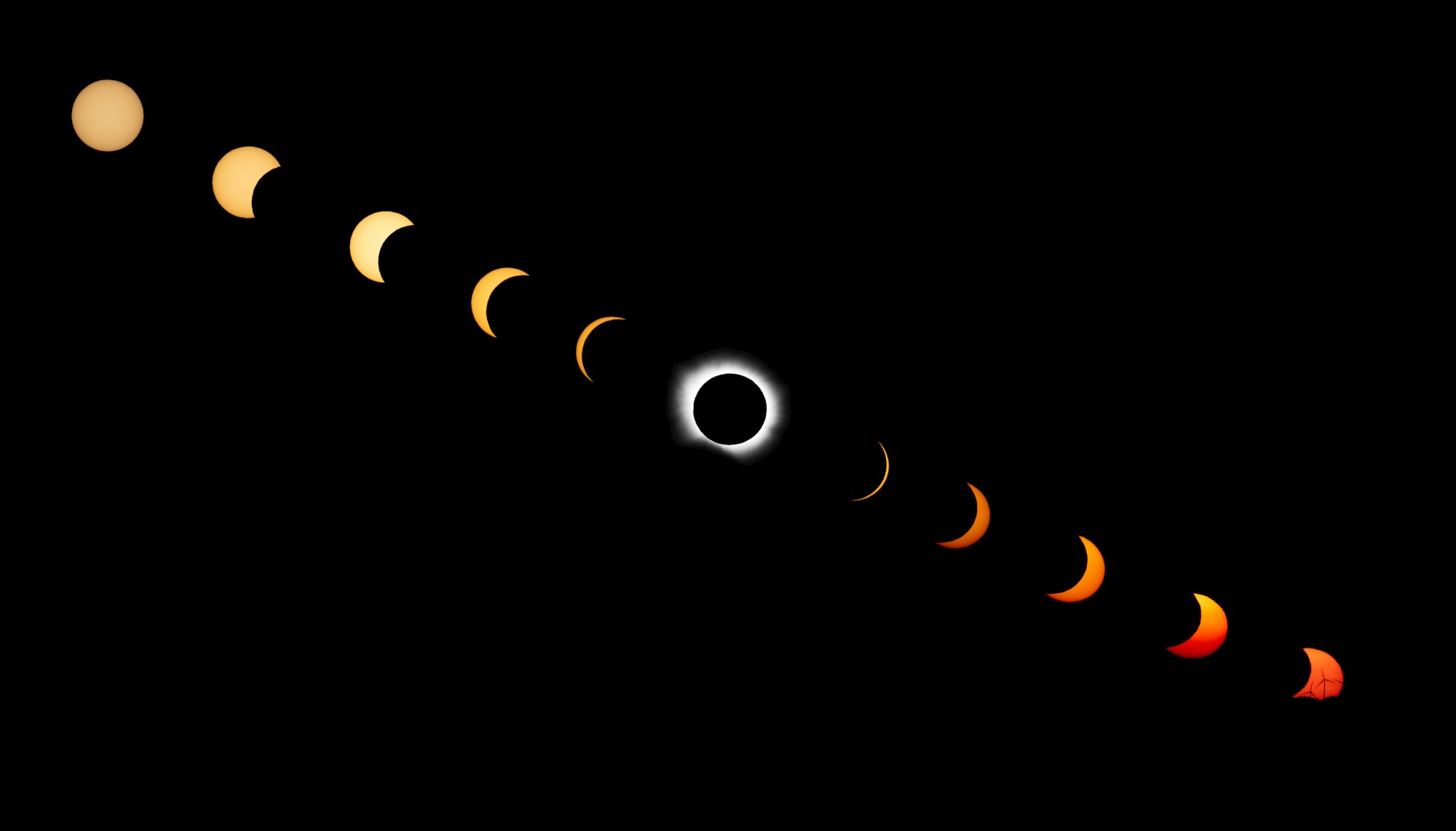
On August 2, 2027, totality will last longer than during any other total solar eclipse of the 21st century. For those beneath the path of totality, the Moon will completely cover the Sun for up to approximately 6 minutes and 23 seconds — an exceptionally rare window to experience the phenomenon in its fullest. The Moon first begins to cover the Sun gradually, turning the familiar solar disk into an ever-thinner crescent. Then comes totality.
On August 2, 2027, totality will last longer than during any other total solar eclipse of the 21st century. For those beneath the path of totality, the Moon will completely cover the Sun for up to approximately 6 minutes and 23 seconds — an exceptionally rare window to experience the phenomenon in its fullest. The Moon first begins to cover the Sun gradually, turning the familiar solar disk into an ever-thinner crescent. Then comes totality.
The sky darkens dramatically. Stars and some planets may become visible, the horizon glows with an unusual twilight, and the solar corona emerges as a delicate, luminous structure surrounding the Moon. For more than six minutes, the day is transformed. Then, almost as suddenly as it disappeared, sunlight returns.
The sky darkens dramatically. Stars and some planets may become visible, the horizon glows with an unusual twilight, and the solar corona emerges as a delicate, luminous structure surrounding the Moon. For more than six minutes, the day is transformed. Then, almost as suddenly as it disappeared, sunlight returns.
AN EXTRAORDINARY PHENOMENON — TO BE OBSERVED SAFELY
A solar eclipse should never be viewed directly without proper solar eye protection. Even when the Sun is partially eclipsed, its intense light can cause permanent eye damage.
A solar eclipse should never be viewed directly without proper solar eye protection. Even when the Sun is partially eclipsed, its intense light can cause permanent eye damage.
Only during the brief phase of totality, when the Sun is completely covered by the Moon, is it safe to look directly at the eclipse. The moment even the smallest portion of the bright solar disk reappears, proper solar protection must be used again.
Only during the brief phase of totality, when the Sun is completely covered by the Moon, is it safe to look directly at the eclipse. The moment even the smallest portion of the bright solar disk reappears, proper solar protection must be used again.
A DATE WRITTEN IN THE SKY
Solar eclipses can be predicted with extraordinary precision. Yet each one remains unique: a fleeting alignment of the Sun, the Moon and the Earth that will never occur in exactly the same way again.
Solar eclipses can be predicted with extraordinary precision. Yet each one remains unique: a fleeting alignment of the Sun, the Moon and the Earth that will never occur in exactly the same way again.
On August 2, 2027, for a few extraordinary minutes, the Moon will take the place of the Sun in the sky. A rare encounter between three celestial bodies — and a spectacle that, for those fortunate enough to stand beneath the path of totality, may become a memory for a lifetime.
On August 2, 2027, for a few extraordinary minutes, the Moon will take the place of the Sun in the sky. A rare encounter between three celestial bodies — and a spectacle that, for those fortunate enough to stand beneath the path of totality, may become a memory for a lifetime.
THE ECLIPSE THAT BROUGHT SOLKAR TO LIFE
SOLKAR began with a single desire: to make the act of looking up feel considered, safe and unforgettable. The 2027 eclipse is not a sales moment. It is the astronomical encounter that gave the idea its reason to exist.
Designed for the moment the world looks up.

SHOP NOW